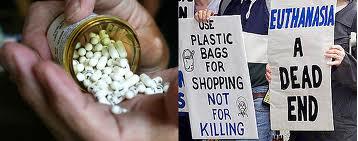
生命的尊严 A Discussion on 1)Euthanasia
“遏制生命的自由不是真正的自由,遏制自由的生命不是真正的生命。”这是一部探讨安乐死的电影,2005年第77届奥斯卡最佳外语片《深海长眠》中的一段对白。
要明白这句话其中的涵义真的不简单。每个旁观者都可以说出冠冕堂皇的理据来阐述自己的想法。当生命已经到了几乎绝望的时候,他可以选择更有尊严地离开吗?对于生命的结束,任何人为的参与都不是宗教和法律所能允许的吗?当明知道即将来到世间的孩子是有重大缺陷的,父母应该选择离弃他吗?而这种离弃与把他带到人世间的坚持相比,站在更低的道德阵地上吗?
每一个问题都是那么地令人纠结,每个人的生活背景、能力、人品和境况等等都决定了这些问题的答案。
最后的结论绝对是只有你自己能做出、也只有你自己负全责的;但是如果我们能从他们的故事里读出更多的仁慈和理解,对生命更多的热爱,那这场讨论就完成它的使命了。
发音:英美发音
语速:150词/分钟
使用方法:泛听+讨论
“I killed someone once. . . He was in terrible, terrible pain. . .”
支持安乐死合法化的一方——决定以死亡来停止痛苦。
场景:根据BBC报道,英国一位著名的资深记者向外透露自己曾经对一个人进行过安乐死。
人物:Ray Gosling——资深记者,宣称自己曾杀死一个人。已经以涉嫌谋杀被捕了。
Philip Nitschke——医生,以主张“协助自杀合法化”闻名。
Eleanor Hall: Yesterday he made a dramatic televised confession. Today a British journalist at the centre of a debate on euthanasia in the UK was arrested on suspicion of murder.
艾伦娜·贺:昨天他在电视上作出一番惊人的自白。今天这位英国记者因涉嫌谋杀而被逮捕,他正是英国备受热议的安乐死问题中的一大焦点人物。
The World Today reported yesterday on BBC journalist Ray Gosling’s admission in a documentary that he killed his former lover who was dying from AIDS by 2)smothering him with a pillow in hospital. The latest developments have 3)galvanised those calling for assisted suicide to be legalised in Britain, as Barney Porter reports.
《今日世界》昨天报道英国广播公司记者雷·高斯林在一部纪录片里承认自己曾经在医院里用枕头亲手将患有艾滋病而奄奄一息的前男友闷死。事态的最新发展激起了要求英国将“协助自杀”合法化的呼声,巴尼·波特报道。
 Barney Porter: Ray Gosling is a veteran BBC broadcaster, and maker of radio and television documentaries. His admission was compelling.
巴尼·波特:雷·高斯林是英国广播公司的一名资深的广播人,制作过不少广播及电视纪录片。他的此番自白相当震撼。
Ray Gosling: I killed someone once. He was a young chap; he’d been my lover and he got AIDS. And in a hospital one hot afternoon, doctor said “There’s nothing we can do.” And he was in terrible, terrible pain. I said to the doctors, “Leave me just for a bit.” And he went away. And I picked up the pillow and smothered him until he was dead. The doctor came back; I said, “He’s gone.” Nothing more was ever said.
雷·高斯林:我杀过一个人。他是个小伙子,是我曾经的恋人,当时得了艾滋病。那是个炎热的夏日午后,在医院里,医生说,“我们已经无计可施了。”而病床上的他痛苦万分。我跟医生说:“让我单独在这呆一会儿吧。”医生于是离开。接着我拿起枕头紧紧蒙着他的脸直到他窒息死去。医生之后回来,我说:“他走了。”之后大家都没再多说什么。
Porter: But much is being said now. Police have admitted they only found out about the case after those comments were broadcast on the BBC’s Inside Out programme on Monday evening, local time. Overnight, Nottinghamshire police issued a statement, simply saying they’d arrested a 70-year-old Nottingham man on suspicion of murder. Mr. Gosling has also said he won’t name his lover, nor say when the incident he described took place.
波特:但现在事情却闹得纷纷扰扰。警方承认他们也是在英国广播公司的《内幕报道》节目那段言论播出(当地时间星期一晚上)之后才揭发此宗案件的。第二天,诺丁汉郡警方发表了一份声明,只是说他们逮捕了一名70岁的诺丁汉男人,怀疑其实施了谋杀。同时,高斯林先生表示他不会公开那位恋人的姓名,也不会透露其描述事件发生的具体时间。
His 4)solicitor is Digby Johnson.
他的代表律师是迪格比·庄逊。
Digby Johnson: The 5)investigations are at a very, very early stage. There’s no saying how long Ray will be here, but he’s in good spirits and I just ask you to respect that these are very, very difficult times for Ray, because by his very nature the sort of thing that we’re talking about is as distressing as it could be.
迪格比·庄逊:现在调查还是处于非常非常初步的阶段。也说不准雷要在这待多久,但他是乐观的。我希望你们能理解尊重,对雷来说,这些是非常非常艰难的日子,因为就他的个性来说,我们在谈论的这种事情是会让他极为痛苦烦恼的。
Porter: Despite repeated challenges in the courts, assisted suicide remains illegal in Britain, and carries a maximum prison sentence of 14 years. However, dozens of terminally ill Britons have gone to die in clinics in Switzerland where assisted suicide is legal, and where family or friends who help them die aren’t 6)prosecuted. There have been 7)anomalies.
波特:尽管经过多次法庭争辩挑战,协助自杀在英国终究被视为非法行为,最高刑罚可判14年徒刑。而至今已有数十名罹患绝症的英国人到瑞士的诊所里了结残生,在那里,协助自杀是合法的,家人朋友帮助病人终结生命也不会被起诉。在英国,也有一些例外个案。
Earlier this year, British woman Kay Gilderdale was cleared of attempted murder for helping her 31-year-old daughter commit suicide after years of suffering from the 8)chronic fatigue syndrome, ME.
今年早前,英国女人凯·葛德黛因协助其长年饱受慢性疲劳综合症、肌痛性脑脊髓炎折磨的31岁女儿自杀而获起诉的蓄意谋杀罪名被判不成立。
But days earlier, another mother, Frances Inglis, was given a life sentence with a minimum of nine years in jail for giving her severely disabled son a lethal heroin injection, after a road accident had left him with brain damage.
但就在那案件宣判的几天前,另一位母亲,法兰西斯·英格利斯则被判终身监禁,至少入狱九年后才能申请假释。事源她为交通意外导致大脑受损而严重残废的儿子注射致命剂量的海洛因。
Britain’s chief public prosecutor has issued interim guidelines on whether to bring charges against people who help their loved ones to die, and invited public comment. He’s due to publish his final guidelines soon.
就应否起诉协助亲人爱眷终结生命的人,英国首席检察官已发表了一份中期指引,并征询各界意见,而最终的指引将会很快出版。
Dr Philip Nitschke is a well-known advocate of legal assisted suicide. He says in 1995, the Northern Territory became the first 9)jurisdiction in the world to allow assisted suicide, under strict conditions.
菲利普·尼什克医生是主张“协助自杀合法化”的著名活跃分子。他表示,在1995年,(澳大利亚的)北领地成为全世界首个允许在符合严格条件的情况下施行协助自杀的司法管辖权的地区。
Philip Nitschke: That didn’t last long—eight months—and then that was overturned by federal government, and the federal government passed law then that said that territories couldn’t make such laws. And everyone went back into the relatively same situation that suicide is not a crime. It’s been 10)decriminalised in all jurisdictions, but anyone who assists usually is subject to fairly savage penalties.
菲利普·尼什克:但为时不久,仅仅八个月后就被联邦政府推翻,而且联邦政府还立法规定各领地不能制定类似的法例。大家又退回到大同小异的境地:自杀不算犯法,所有司法管辖权里,自杀都已非刑事化,但是任何人协助他人自杀则通常会被严刑论处。
Porter: However, Dr Nitschke says the states and territories have tried to deal with the right to refuse treatment.
波特:但是,尼什克医生说,各州各领地已着手处理病人“拒绝医治”这一权利。
Nitschke: They vary in their…how broad they are and how, if you like, patient-friendly they are. The most recent one to pass and be enacted was Western Australia a couple of weeks ago. But that’s to do with refusing treatment, it’s not about allowing someone to get help to die—you can’t go and ask for help to die. All you can say is, “I don’t want that treatment.”
尼什克:各地做法也有些差别……涵盖面不一样,而且,这样说吧,“病人舒适度”也不一样。最近通过立法的是西澳地区,几个星期前的事。但那谈的是拒绝医治,并非说允许某人寻求他人协助结束生命——你不能叫人帮忙寻死。你只能说,“我不愿意接受那治疗了。”
Porter: Recently, Tasmania, South Australia, and Victoria all tried to introduce legislation similar to the original Northern Territory law and more attempts are being planned.
波特:最近,塔斯马尼亚、南澳、维多利亚地区都着手立法,采用北领地类似的相关法律,更多地区也纷纷计划仿效。
Nitschke: The one that’s coming up next is probably going to be South Australia and that’s probably got the most chance of passing.
尼什克:下一个尝试立法的很可能是南澳地区,通过的机率很高。
That law will be a very strictly controlled variation on what the territory had. You’ll have to be just about dead to qualify, but if you do qualify a doctor will be lawfully able to give you the drugs that will be needed to allow you to die.
那是在该地区旧有法规基础上变改并加以严格控制的新例。要快死了的人才符合资格,而如果真的是合资格,那么医生就能合法地给你施药让你安然离世。
Porter: As in Britain, the euthanasia debate here is far from over.
波特:跟在英国的情况一样,关于安乐死的讨论在澳大利亚也远未结束。
“Why a woman would consider it an easier path to perhaps, if you will, do away with the problem, instead of understanding that every child has purpose.”
支持生下有残障孩子的一方——珍视每一个生命。
场景:美国一个电视清谈节目《The View》,就阿拉斯加加州州长Sarah Palin关于坚持生下明知有唐氏综合症的小儿子一事,进行讨论。
人物:Sarah Palin——阿拉斯加州州长,决定生下有残疾的儿子。
Barbara Walters——著名媒体人,自己的姐姐也是有天生的精神疾病;认为对一个家庭而言,是一个很悲剧的事。
Woopi Goldberg——著名演员,认为没有一个人有资格对当事人的决定作判断。
Barbara Walters: Sarah Palin and her husband Todd have five children. The youngest is 19-month-old Trig, who was born with 11)Down’s syndrome. Ninety percent of pregnant women who learn they are carrying a Down’s syndrome baby have an 12)abortion.
芭芭拉·华尔特斯:莎拉·佩林和她的丈夫托德共育有五名孩子。最小的是19个月大的特里格,生下来便患有唐氏综合症。检测得知自己怀的孩子有唐氏综合症的孕妇中90%都会选择堕胎。
 When you heard that you were going to have a Down’s syndrome child you said, “I’m not sure that I can handle this.” Did you think then, even for a second, about aborting that baby?
当你听到自己怀的孩子有唐氏综合症时,你说“我不知道自己能不能面对这事实”,那时你有没有想过,哪怕是一闪而过的念头,要把孩子打掉?
Sarah Palin: I knew that the option was there, and that, Barbara, when I got those results back from the 13)amniocentesis, it showed yes he had an extra 14)chromosome, I thought again, for that split second, okay now I know too why, when that fear strikes you, because of the unknown, why a woman would consider it an easier path to perhaps, if you will, do away with the problem, instead of understanding that every child has purpose. There is destiny for every child, and it can be good in our world, and that’s what I held on to.
莎拉·佩林:我知道是有这么个方法可选择。芭芭拉,那时候,我拿到羊水检查的结果,显示孩子的染色体多出了一个,刹那间我想到,我终于知道为什么,当恐惧袭来,面对未卜的前景,一个女人会觉得堕胎是个轻松把问题解决掉的方法,而不去想想,其实每个孩子都是带着使命降生的。每个小孩都有各自的命运前程,来到我们的世上可以是美好的,我当时就是坚持这么想的。
Walters: She is, of course, a right to life.
华尔特:她,不用说,就是反堕胎派的。
Woopi Goldberg: Yeah, but it sounded a…and maybe I’m miss-hearing it, but it sounded a tad bit judgmental of women who may, not make the choice. I don’t think it’s easier for women to “do away with the problem”. Sometimes some women can’t handle it. Some women don’t have the financial ability to do it. There’s a lot of reasons people make these choices. And I understand being pro-life or stuff, but I…I just…I feel like I would’ve much rather heard her. I loved what she was saying, and then I was like, well you can’t really sort of say “do away with the problem”. That’s kind of a 15)quaint thing to put it…
乌比·戈德堡:是啊,但这听起来……也许我听错了,反正感觉对那些选择不要孩子的女人,看法有一点点武断。我觉得,女人要“把问题解决掉”不是件容易的事。有时,一些女人就是没法承受,有些根本没有这个财力去承担。之所以选择这么做,背后是有很多原因的。我理解那些反堕胎之类的,但是,我……我只是……觉得我会宁愿听她说……我喜欢她说的那些,可是我又会觉得,你真不能说人家“把问题解决掉”,听起来怪怪的……
Walters: But she did say, “I could understand how they felt”, you know, for a brief moment.
华尔特:但是她的确也说了,有那么一刻“我明白她们的感受”。
Goldberg: But she came at a backhanded…
戈德堡:但她是在明褒实贬……
Sherri Shepherd: When she said it I took it as a…you know, when you say, “It is not an easy decision to make,” but you always have another person. You might have a person who goes, “but here’s another way to think of it.” That’s the way I took it when she said babies with Down’s syndrome have a destiny. That, here’s another way to look at it.
莎莉·谢泊德:她说这话的时候,我是当作……你知道吧,你嘴巴是说“这不是个容易的抉择”,但心里总是有另一面,你可能会是想着“但是可以换个角度看看。”当她说患唐氏综合症的孩子有其使命的时候,我就是这么想的,就是换个角度来看吧。
Elisabeth Hasselbeck: I think it can be, you know, I think that maybe if she were to hear it and understand how people are understanding what she said in terms of the easier way out, I think that obviously can cast a certain level of judgment on somebody else, so I get what you’re saying. But I do think her cause is great in that, you know, if you’ve known anyone growing up with special needs and you know the love that they give and how they teach you how to love, and there shouldn’t be a 16)hierarchy of beings. There shouldn’t be “this person is more valuable”. When you say that 90% …That’s absolutely 17)staggering!
伊丽莎白·哈瑟贝克:我想这是有可能的,我想,要是她听听自己的话,去看看人们是怎么理解她所说的“轻松解决问题”的话,我想那显然是对其他人投射了某种程度的批判的。所以,我明白你的意思。但是,我还是觉得她选择的这条路是伟大的,因为,你知道吧,如果你认识这些有特殊需要的孩子,你就会知道他们带来的那种爱意,他们会教会你怎么去爱,而且人不应该有等级之分。不应该说“这个人是更有价值的”。当你说90%的……那绝对是让人震惊的!
Joy Behar: The way you say it, it sounds like it’s more about the mother. They teach you how to love.
乔·贝哈:你说的,听起来好像是更在于当母亲的。是她们教会你怎么去爱吧。
Walters: Sarah Palin, by the way, …
华尔特:顺便说说,莎拉·佩林……
Hasselbeck: Children often to say that…
哈瑟贝克:孩子们常常说那……
Walters: Sarah Palin does say it teaches you…it teaches you compassion and so on, but I’m gonna say something now very seriously, because I’ve written about it. I had an older sister, who has passed away, who was called “18)retarded”. Today we say “special needs”, but there still is in New York, and I…I give them…I give them money. It’s called the Association for the Help of Retarded Children. We call them now “special needs”, and having my sister the way she was, I loved her dearly, but I was also very 19)conflicted. This is a very complicated situation. It’s very easy for someone outside of it to say, “Oh it gives you compassion.” I know what my sister went through and I know what I went through, and it’s an extremely difficult decision that affects the entire family.
华尔特:莎拉·佩林确实是说这能教会你……教会你有同情心等等,但是我现在要很认真地说几句,因为我曾经就这个问题写过些东西。我曾经有个姐姐,现在已经去世了,那时候人们是喊她“迟钝儿”的。今天我们会说那是“有特殊需要”,但在纽约还是有……我给他们捐过款的,叫“迟钝儿童援助协会”。现在我们称呼他们是有“特殊需要”,尽管我姐姐是那个样子,我很爱她,但是,我同时也很挣扎。这是个非常复杂的处境。置身事外的人自然可以很轻松地说什么“噢,这教会你同情他人”。我懂得姐姐吃的苦头,也知道自己熬过的一切,那的确是影响整个家庭的极为困难的抉择。
Hasselbeck: But all children, I think, present their parents with difficulty at some point. There’s no guarantee that…
Walters: Not the same, no, Elisabeth.
Hasselbeck: No, that I…I…I think the challenges are unique, but what I’m saying in as where do you draw the line…
Walters: …as a child with special needs.
Hasselbeck: Is it then someone with a visual impairment that we’re gonna see the 90% …
Walters: I’m not talking about that. I’m not saying…
Hasselbeck: No, no, no, I know.
Walters: …do away with abortion…
Hasselbeck: Absolutely not!
Walters: I’m just saying.
Hasselbeck: I was in no way inferring that.
Walters: Okay.
Hasselbeck: I believe though that there is…I think that every child uniquely presents challenges to parents, and I think that, when you see that 90%, I think that’s what is almost…
Goldberg: Only you…only you know what your situation is. No one outside of you can judge you for making the choices you make.
哈瑟贝克:可是,所有孩子,我觉得,在某个时刻都会给父母带来难题。没有担保说……
华尔特:不一样的,不是,伊丽莎白。
哈瑟贝克:不是,我也觉得那些挑战是不一样的,但我的意思是,你怎么划分界线呢……
华尔特:……作为有特殊需要的孩子。
哈瑟贝克:那是不是说万一视觉受损的,我们也会看到90%的……
华尔特:我不是那个意思。我不是说……
哈瑟贝克:不是不是,我知道。
华尔特:……不是说用堕胎来解决问题……
哈瑟贝克:绝对不是!
华尔特:我就是说……
哈瑟贝克:我没得出这样的推论啊。
华尔特:那就好。
哈瑟贝克:但是,我相信有……我觉得每个孩子都会给父母带来难题,而我觉得,当你看见那90%的数字,那几乎是……
戈德堡:只有你……只有你才知道自己的情况。没有外人可以对你所作出的抉择妄加评断。