不惧权威,敢于质疑 Young and the 1)Perceptive
文字难度:★★★
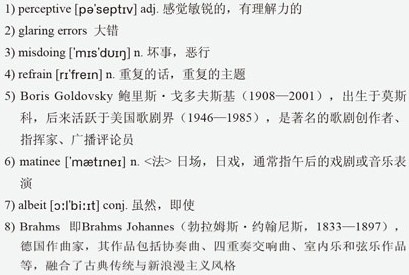
It has been more than three years since the beginning of the Wall Street financial crisis, yet we continue to hear about new evidence of 2)glaring errors and widespread 3)misdoings. Even the smartest minds in finance are left scratching their heads: how did we not catch any of this sooner?
华尔街金融危机爆发至今已有三年多了,然而现在还时有新证据浮现,印证当初那些昭然的错失和普遍的谬行。即便是金融界里最聪明的头脑也只能无奈地挠头:我们为什么没有早点发现错误呢?
When I hear this 4)refrain, I am reminded of 5)Boris Goldovsky. Goldovsky, who died in 2001, was a legend in opera circles, best remembered for his commentary during the Saturday 6)matinee radio broadcasts of the Metropolitan Opera. But he was also a piano teacher. And it is as a teacher that he made a lasting—7)albeit unintentional—contribution to our understanding of why seemingly obvious errors go undetected for so long.
听到这一重复老调,我想起了鲍里斯·戈多夫斯基。2001年逝世的戈多夫斯基曾经是歌剧圈的传奇,因其为大都会剧院的周六音乐广播节目作评论而广为人知。但他同时也是一位钢琴老师。并且,也是作为一位老师,他——即使是不经意地——帮助我们理解了为什么显而易见的错误会长时间不被察觉,这一发现影响深远。
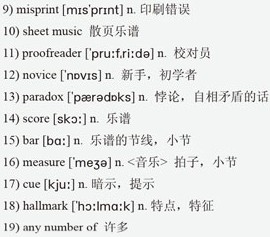
 One day, a student of his was practicing a piece by 8)Brahms when Goldovsky heard something wrong. He stopped her and told her to fix her mistake. The student looked confused; she said she had played the notes as they were written. Goldovsky looked at the music and, to his surprise, the girl had indeed played the printed notes correctly—but there was an apparent 9)misprint in the music.
有一天,当他的一名学生在练习勃拉姆斯的作品时,戈多夫斯基听到曲子弹错了。他叫她停下来,并纠正错误。学生看起来很困惑,她说自己是按照书上所写的音符来弹的。戈多夫斯基看了看乐谱,让他吃惊的是,女孩的确是正确地按照乐谱上的音符来弹的——但是在曲子里有一个很明显的印刷错误。
At first, the student and the teacher thought this misprint was confined to their edition of the 10)sheet music alone. But further checking revealed that all other editions contained the same incorrect note. Why, wondered Goldovsky, had no one—the composer, the publisher, the 11)proofreader, scores of accomplished pianists—noticed the error? How could so many experts have missed something that was so obvious to a 12)novice?
一开始,学生和老师都认为仅仅是他们这一版的散页乐谱有印刷错误。但是经过进一步的检查后,他们发现其他所有版本都有相同的错误音符。为什么,戈多夫斯基想,没有人——作曲家、出版商、校对员以及大量的杰出钢琴家——发现这个错误?那么多的专家怎么能够漏掉一个对初学者来说这么明显的错误?
This 13)paradox intrigued Goldovsky. So over the years he gave the piece to a number of musicians who were skilled sight readers of music—which is to say they had the ability to play from a printed 14)score for the first time without practicing. He told them there was a misprint somewhere in the score, and asked them to find it. He allowed them to play the piece as many times as they liked and in any way that they liked. But not one musician ever found the error. Only when Goldovsky told his subjects which 15)bar, or 16)measure, the mistake was in did most of them spot it.
这个悖论引发了戈多夫斯基的兴趣。于是,在接下来的那些年里,他把这份乐谱拿给一些有熟练视奏技巧的音乐家过目——也就是说他们不经过练习就能把第一次看到的印刷乐谱弹奏出来。他告诉这些音乐家在乐谱的某个地方有一处印刷错误,请他们找出来。他允许他们不限次数、不限方式地弹奏这首曲子。但是,没有一个音乐家能找出这个错误。只有当戈多夫斯基告诉他们错误在哪一小节或哪一拍时,大部分音乐家才注意到。
Goldovsky’s experiment yielded a key insight into human error: not only had the experts misread the music—they had misread it in the same way. In a subsequent study, Goldovsky’s nephew, Thomas Wolf, discovered that good sight readers report that they do not read music note by note; instead, they rely on their recognition of familiar patterns and on their ability to organize the music into those patterns and dependable 17)cues.
戈多夫斯基的实验让我们对人类的错误有所洞察:专家们不仅仅是误读了这一曲目——他们误读的方式也如出一辙。在随后的研究中,戈多夫斯基的外甥托马斯·沃尔夫发现,优秀的视奏者称他们并非逐个音符逐个音符地读曲目;相反地,他们依赖的是对熟悉模式的识别能力,往往会以自己所熟知的模式和惯用的进入提示来解读面前的乐篇。
In short, they don’t read; they infer. Moreover, this trait is not unique to musicians: pattern recognition is a 18)hallmark of expertise in 19)any number of fields; it is what allows experts to do quickly what amateurs do slowly.
简而言之,他们不细读,而是推断。并且,此特征不仅限于音乐家:模式识别是任何一个领域的专家的特征;这就是为什么专家能够做得很快,但是业余者却做得慢的缘故。
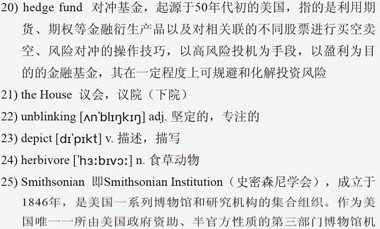
Goldovsky’s insight offers a useful metaphor for understanding the crisis on Wall Street: Not only did 20)hedge fund managers, bankers and others misread the danger involved in many of their investments, but they misread them in the same way. As Paul E. Kanjorski, a former congressman who served on 21)the House Financial Services Committee, put it, “Why does it appear to the general public that all the finest minds in finance missed the most obvious?” It appears that way because they did miss it. These types of errors are most likely to be discovered by those who, like Goldovsky’s young student, look at the world with new, 22)unblinking eyes.
戈多夫斯基的发现为我们理解华尔街发生的金融危机提供了有用的隐喻:对冲基金经理、银行家以及其他人不但误读了隐藏在他们投资里的危险,而且他们误读的方式如出一辙。正如曾经在众议院金融服务委员会工作过的前议员保罗·E·坎瑞斯基所说:“为什么普罗大众会觉得金融界最出色的头脑反而漏掉最明显不过的东西?”出现这种情况的原因是因为他们的确是漏掉了。这类型的错误最有可能被那些像戈多夫斯基的年轻学生那样、用全新的眼光专注地看待世界的人所发现。
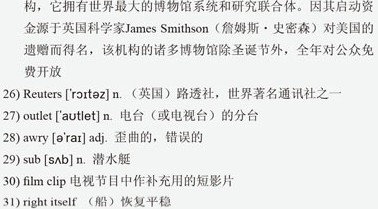
In 2009, for instance, a first grader in Virginia noticed that a popular library book 23)depicted a meat-eating dinosaur as an 24)herbivore. A year before that, a fifth grader from Michigan discovered an error at a 25)Smithsonian exhibit that had gone undetected for 27 years. And in 2007, another error was caught, this time by a 13-year-old boy in Finland. The mistake involved an image of a submarine that a Russian TV company had used to illustrate a report about a Russian submarine voyage to the Arctic. The image, distributed by 26)Reuters, was used by news 27)outlets around the world. No one noticed anything 28)awry. But the boy, Waltteri Seretin, did. The 29)sub, he thought, looked suspiciously familiar. His suspicions were right: it was a 30)film clip taken from the movie Titanic.
例如,在2009年,美国弗吉尼亚州一位一年级学生发现了图书馆里有本热门参考书将一只食肉恐龙描述成食草动物。在此前一年,美国密歇根州一位五年级学生发现了史密森尼学会下属的一个博物馆巡回展里有个展品有误,而这个错误27年来从未被发现。而在2007年,另外一个错误被发现了,这次的发现者是芬兰一个13岁的小男孩。这个错误涉及一幅一家俄罗斯电视公司用来描述有关俄罗斯潜艇航行去北极的图片。这幅由路透社发布的图片,被世界各地的新闻机构引用,没有人发现有什么不妥之处。但是,这个名叫华特利·塞林汀的男孩却发现了一处问题。他觉得这艘潜水艇看起来极其熟悉。他的怀疑是正确的:这幅图片是从电影《泰坦尼克号》里截取出来的电影画面。
Unlike the Titanic, the stock market appears to have 31)righted itself—even as many investors remain underwater. It may be too much to suggest that we let adolescents run Wall Street (assuming, of course, that this isn’t already the case). But that wouldn’t hurt to let them check the math.
跟《泰坦尼克号》不同,股票市场似乎开始慢慢自我调整过来了——即使许多投资者仍然身处“水深火热”之中。如果我们建议让青少年去管理华尔街或许有点过分(只是假设,当然,情况还没有变成这样),但是让他们去算算帐倒也无妨。