解开梦境之谜 Dreaming of Nonsense: the Evolutionary 1)Enigma of Dream Content
2010年的热门大片《盗梦空间》将“梦”这个元素发挥到了极致,也掀起了一股“解梦”的热潮。
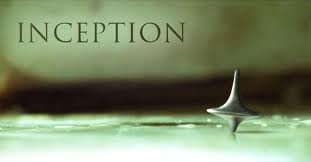
我们对未知的领域总有一种异样的执着,就像梦境。那些在梦中出现的楼梯,走廊,会说话的猪等等形象让人不解,令人困惑。精神分析大师弗洛伊德的“性原力说”把梦中的意象归为“未得到纾解的欲望的反映”,而仅靠这一学说来解释梦境并不能令人信服。于是,诸多理论涌现,有些看似匪夷所思,但是却又不无道理。你不能在这里得到一个确切的答案,就像《盗梦空间》片尾的那个转动的陀螺一样——它到底有没有停下?
文字难度:★★★
 Loading up the 2)trunk of my car with clothes hangers when approached by two 3)transients…try to engage them in good-natured conversation about the benefits of wooden clothes hangers over metal ones, but they make me uneasy, say they want to go out to get a drink but I’ve got to go.
我把衣架装上我的车尾箱的时候,两个路人走了过来……我试着和他们友善交谈,说一下木衣架比铁衣架更优越,但是他们让我觉得有点不自在,他们说想出去喝一杯,可是我却要走了。
Saturday, 4:47 a.m.: Was just now trying to return my dead grandmother’s cane to her. Took elevator to her apartment…meant to go to the 8th floor, but elevator 4)lurched up to the 18th floor, swung around violently then shot back down.
星期六凌晨4点47分:刚刚试着把拐杖还给我已去世的奶奶。乘搭电梯去她的公寓……本来打算上到了8楼的,但是电梯突然冲到18楼,一阵剧烈摇晃之后猛地往下掉。
Sunday, 5:02 a.m.: On a 5)floating barge in the sea trying to get to some other country, just made it, the dogs are running all over the place but seem more like 6)rodents.
星期天凌晨5点02分:在海上乘着一艘浮力驳船到国外去,刚抵达就看见到处都是狗,可是这些狗看上去更像是一些啮齿类动物。
These are dreams, of course. Mine from the past few days, to be precise—and they are totally absurd. Why on earth do our minds 7)conjure up such ridiculous imagery, such 8)inane thoughts, such spectacularly vivid and surreal landscapes, intense emotions—such 9)narrative trash? Harvard University psychologist Deirdre Barrett might have some answers for us. Recently Barrett 10)shrugs off the better-known 11)psychoanalytic theories of dreams (for example, 12)Freud’s “wish fulfillment” and 13)Jungian 14)archetypes) as being 15)irreconcilable with a Darwinian framework and instead highlights the major contemporary, biologically informed theories. So here’s a 16)snapshot of the current evolutionary contenders in the field of dream studies:
以上所述当然都只是梦。准确来说,是我过去几天里做过的梦——它们都很荒谬。到底为什么我们的大脑会虚构出如此荒唐的幻象,如此毫无意义的意象,如此精细逼真、超现实的景色,以及强烈的情感——如此无聊的一段段故事碎片?哈佛大学的心理学家黛迪尔·巴瑞特或许可以为我们作出一些解答。最近,巴瑞特抛开那些更为著名的梦境精神分析理论(如弗洛伊德的“愿望实现”学说和荣格的“原型”),认为这些理论与达尔文的基本学说相矛盾,而且突出强调了那些基于生物学的当代主要理论。以下段落是现今梦研究领域中的一些进化派理论:
Brain Conditioning
大脑调节理论
In the 1960s, sleep researchers began to notice that, in contrast to other stages of sleep, the brain was especially active during 17)REM (rapid eyes movement) sleep. Several researchers argued that the adaptive purpose of dreaming may therefore be primarily to stimulate the brain or to keep it “in shape” during prolonged periods of inactivity. In general, the brain conditioning theories don’t place much, if any, emphasis on dream content. As psychologist Steven Pinker writes, “For all we know, dreaming might be a kind of screen saver in which it doesn’t really matter what the content is as long as certain parts of the brain are active.”
在二十世纪六十年代,睡眠研究人员开始留意到,与其他睡眠阶段相比,大脑在眼球快速运动睡眠阶段尤其活跃。因此,几位研究人员认为,做梦的调节性目的主要是为了在较长的人体静止期间使大脑处于兴奋状态或者保持其“良好状态”。总之,大脑调节理论并没有过多强调梦的内容。正如心理学家史迪芬·平克所写的:“我们所知道的只是梦就像一种屏幕保护,只要它使大脑的某些部分处于活跃状态就行了,屏保展现的内容并不重要。”
External 18)Vigilance
外界警觉理论
Don Symons wasn’t entirely satisfied by brain conditioning theories of dreaming, in large part because these theories didn’t really19)crack the question of why dreams have such a specific sensory profile of being so vividly visual while comparatively 20)impoverished in sound, smell and other sensory domains. Symons points out sleepers are particularly vulnerable to real-world threats and hazards in their external environment, and so they must unconsciously monitor their environment with specific senses.
唐·西蒙斯并不完全信服大脑调节理论,主要是因为这些理论没有真正地解开一个难题:为什么梦境给人的视觉感受如此具体和逼真,而听觉、嗅觉和其他感官感受在梦境中却又相对较弱?西蒙斯指出,睡着的人特别容易受到外界的真实威胁和危害的影响,所以他们潜意识里要留着某些感官来监视外界环境。
Threat 21)Simulation Theory
模拟威胁理论
This clever evolutionary theory holds that dreaming serves a biologically adaptive function because it allowed our ancestors to simulate problem-solving strategies for genuine, waking life threats. Antonio Zadra, Sophie Desjardins, and Eric Marcotte of the University of Montreal neatly summarize the central argument of the theory this way: “By giving rise to a full-scale22)hallucinatory world of subjective experience during sleep, the dream production mechanism provides an ideal and safe environment for such sustained practice by selecting threatening waking events and simulating them repeatedly in various combinations.”
这种巧妙的进化理论认为做梦起着一种生物适应性功能,因为在梦境中我们的祖先可以模拟解决难题的策略,来应对清醒时现实世界的威胁。蒙特利尔大学的安东尼奥·扎多拉、索菲·德斯贾汀,以及埃里克·马科特简要地总结了这个理论的核心论点:“在睡觉时,人类大脑的做梦机制会选择人们清醒时的威胁性事件以各种组合形式反复模拟呈现梦中,透过睡梦中构筑的一个有关主观体验的完全虚幻的世界,为反复练习应对威胁提供理想的安全环境。”
Costly Signaling Theory
高代价炫耀理论
 Boston University neuroscientist Patrick McNamara’s theory draws from the well-known “23)handicapping principle” in evolutionary biology, where some organisms have been observed to display behavioral traits or physical characteristics that seem 24)ostensibly to disadvantage them but in fact simply reflect their genetic value. The classic example of this is “25)stotting” behavior in healthy young gazelles, where these animals jump up and down in front of a 26)predatory leopard rather than immediately run away. Stotting is a “costly signal,” but it works, because the leopards take this stotting display as evidence that this particular gazelle is so healthy and fit that it can afford to handicap itself and is therefore unlikely to be an easy target. McNamara argues that dreaming can best be understood also as a type of costly signal. He points out that REM sleep is associated with increased 27)mortality, particularly with respect to the irregular activity of the 28)cardiovascular system.
波士顿大学神经学家帕特里克·麦克纳马拉的理论来源于生物进化学上的著名原理“不利条件原理”,该原理指出,根据观察表明有些生物体所展现的行为特点或者生理特征表面上似乎对自身不利,但是实际上直接显示了他们的基因价值。最经典的例子就是年轻健康羚羊的“跳跃”行为:在看到凶猛的猎豹时,羚羊会上下跳跃,而不是赶紧逃走。这种跳跃就是一种“高代价的炫耀”,但是这种行为颇有效果,因为猎豹把这种跳跃看成是健硕的证明,这种不惜陷自己于险境的行为说明这只羚羊健康而壮硕,所以很难被逮住。麦克纳马拉认为,做梦也最适宜被理解为一种高代价炫耀。他指出,眼球快速运动睡眠阶段与死亡风险的增加息息相关,尤其考虑到在这个阶段心血管系统的不规则运动更是如此。
Dreaming as Problem-Solving
做梦试练解题
Barrett’s preferred evolutionary explanation for dreaming, and the one she’s best known for, is that29)dreamscapes provided our ancestors (and therefore us) with a sort of creative 30)canvas for solving real-world problems. In support of this, Barrett describes the work of Stanford University psychologist William Dement, who in the early 1970s instructed hundreds of undergraduate students to work on a set of challenging 31)brainteasers before bedtime, so that they’d fall asleep with the problems still on their mind. For example, “The letters O, T, T, F, F…form the beginnings of an infinite sequence. Find a simple rule for determining any or all successive letters.” [The correct sequence is the first letter of each number, so the next one would be “S” for “six.”] One participant who went to bed frustrated by this brainteaser dreamed:
巴雷特赞成用进化论来解释做梦,而她最为著名的理论是梦境为我们的祖先(和我们)提供一个创造性空间来解决现实世界中的难题。为了证明这个观点,巴雷特描述了斯坦福大学心理学家威廉·德门特的一项实验,在二十世纪七十年代早期,德门特要求数百名大学生在睡前做一套极具挑战性的难题,因此他们入睡时问题依然留在脑海中。例如,“一个开头为‘O’、‘T’、‘T’、‘F’、‘F’……的无穷序列,找出一个简单规律来断定序列里部分或所有连续字母。”(正确的序列是每个数字的英文首字母,所以下一个字母应该为数字“6”的英文首字母“S”。)其中一个参加该实验的学生睡觉前对这道题苦思冥想而不得其解,他当晚做了这么一个梦:
I was walking down the hall of an art gallery. I began to count the paintings—one, two, three, four, five. But as I came to the sixth and seventh, the paintings had been ripped from their frames! I stared at the empty frames with a peculiar feeling that some mystery was about to be solved. Suddenly I realized that the sixth and seventh spaces were the solution to the problem.
我走在一个画廊的大厅里。我开始数那些画作——一,二,三,四,五。当我数到第六和第七幅画时,发现那些画被人从画框里撕了下来!我望着空荡荡的画框,感觉到一些谜团正要被解开。突然,我意识到第六和第七个空位就是这道题的答案。
Personally, I think each of these major evolutionary theories of dreaming has some currency. And speaking of bizarre and surreal, there’s of course the curious case of 32)erotic dreams. And the exploration still has a long way to go.
我个人认为,上述关于做梦的主要进化理论都各有价值。说到梦境的怪异和超现实,当然还包括了那些奇怪的绮梦,只能说梦境探索之路依然漫长。